
23 September 2026
ACLE 2026 Post-Show Report
Connecting the Leather Supply Chain Through a Changing Market
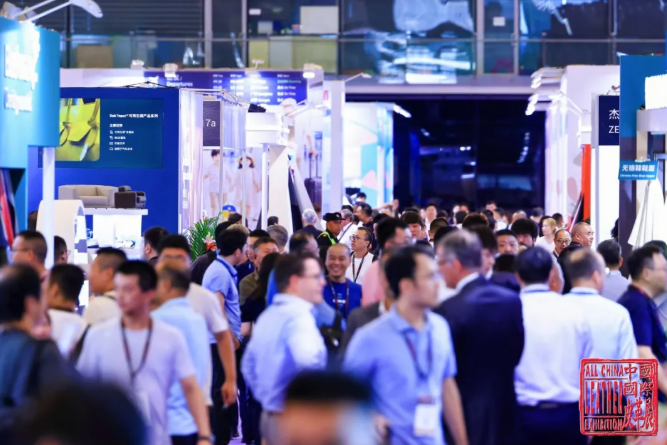
More than 900 exhibitors from over 30 countries and regions participated across eight halls, presenting hides and skins, semi-finished and finished leather, chemicals, machinery, components, footwear materials and manufacturing technologies.
ACLE 2026 welcomed more than 34,000 visits, an all-time record, up 5.7% year on year and 44.7% above the last pre-pandemic edition in 2019.
Visitor satisfaction also remained exceptionally high, with the average Customer Satisfaction Score reaching 9.15 out of 10.
The Demand Conundrum
The global leather industry continues to operate against a challenging economic and market backdrop. Geopolitical tensions, inflation, uncertainty around tariffs and changing trade conditions are affecting business confidence and contributing to weaker demand across many markets.
For leather, rebuilding demand is not only an economic issue. The industry also needs to communicate more clearly the material’s quality, durability, performance and long-term value. Industry initiatives including Leather Naturally, Is It Leather?, Real Leather. Stay Different. and CLIA’s Genuine Leather Mark are part of wider efforts to strengthen consumer understanding of leather.
At ACLE, this discussion moved beyond promotion of leather itself. Exhibitors placed greater emphasis on improving cutting yield, creating a more natural appearance, reducing resource use and strengthening supply-chain transparency — all factors that can help leather demonstrate greater value to brands and consumers.
Against this backdrop, three areas stood out across ACLE 2026: changing value in leather, the growing connection between regulation and production efficiency, and the increasing role of digitalisation and AI in downstream product development.
Leather: changing supply, changing value
China’s leather market remains under pressure, but the picture is increasingly differentiated.
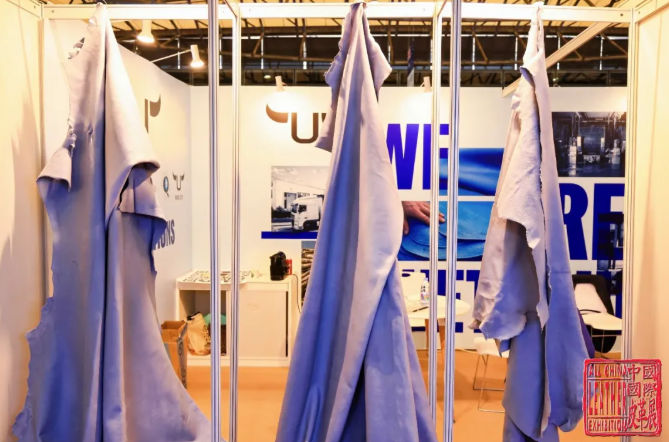
In the first half of 2026, sales among key tanning enterprises fell 12.8%, while light leather output declined 6.5% to 140 million square metres. At the same time, China imported 749,000 tonnes of raw hides and skins, up 7.0%, while imports of semi-finished and finished leather declined.
The international supply picture is also shifting. Brazil remains a major source of leather for China. In 2025, China accounted for 31.7% of Brazilian leather export value and 45.8% of export area, with exports to China reaching US$358.9 million.
In the United States, cattle supply remains constrained. At the Tanning Industry Development Exchange Conference, U.S. cattle slaughter was estimated at approximately 27–28 million head in 2026, around 5% below 2025.
Another change is emerging in the use of hides themselves. Some hides are increasingly finding alternative applications in collagen, gelatin and other protein-related uses. At the same time, traceability and lower-carbon production are becoming more important in helping leather suppliers create value for customers further down the supply chain.
The move towards higher value is also visible in automotive leather. Softer Nappa, stronger tactile qualities and healthier interiors are gaining importance, while qualities traditionally associated with premium furniture leather — softness, comfort and a more residential feel — are increasingly being adapted for vehicle interiors.
Chemicals & Machinery: regulation meets production efficiency
For chemical and machinery suppliers, ACLE 2026 showed how sustainability requirements are increasingly translating into practical production decisions.
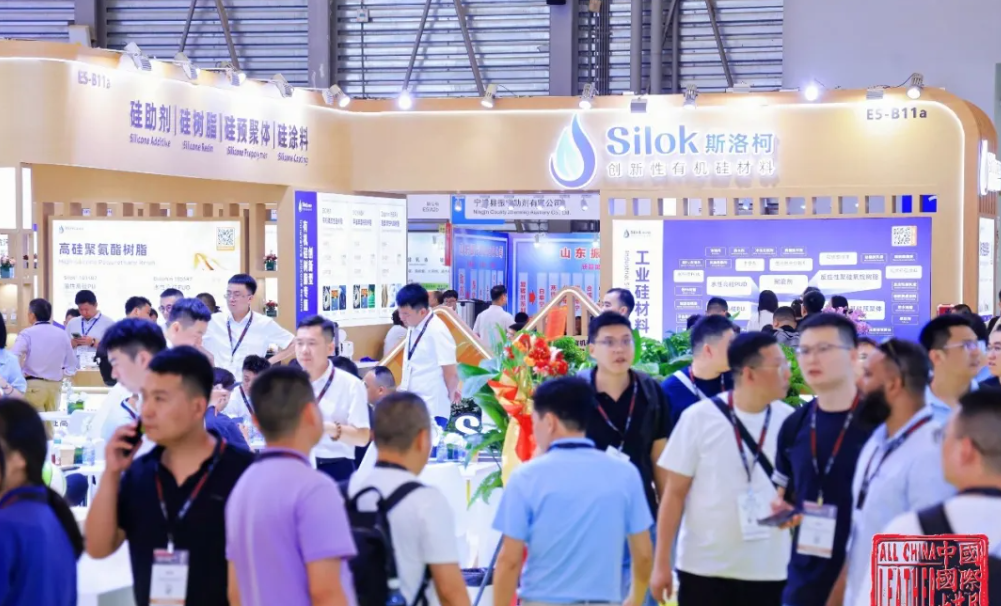
PFAS was a prominent issue. CTC addressed evolving global restrictions, analytical methods and compliance strategies, while Sustainable Leather Foundation and Rolfes Leather Chemicals examined how ESG assurance is extending beyond the tannery to chemical suppliers and other parts of the leather value chain.
On the show floor, these priorities were already visible in commercial technologies. Exhibitors presented chrome-free and bisphenol-free tanning systems, wastewater recycling, vegetable tanning and other cleaner-production solutions. New approaches focused not simply on removing substances, but on reducing waste and resource consumption while maintaining leather performance.
The same principle was apparent in chemical innovation. Solutions combining performance with safer chemistry, improved cutting yield and DMF-free production were presented, alongside process improvements designed to make more efficient use of tanning chemicals and reduce residual waste. There was also growing interest in bio-based and application-specific chemistry for suede, upholstery and automotive leather.
Machinery is moving in the same direction through automation and digitalisation. Technologies presented included intelligent leather scanning, automated cutting and nesting, and digitally controlled coating equipment designed to improve productivity, precision and material efficiency.
Footwear & Bags: digitalisation moves into product development
China’s downstream manufacturing sector remains mixed.
Sales among key footwear enterprises fell 6.1% in the first half of 2026, while leather footwear output declined 7.6% to 970 million pairs. Travel goods and luggage sales decreased 5.3%, with exports down 3.1%. By contrast, leather garments recorded stronger growth, with key-enterprise sales rising 25.5%.
At ACLE, however, the conversation increasingly focused not only on production volume, but on how materials are selected and products are developed.
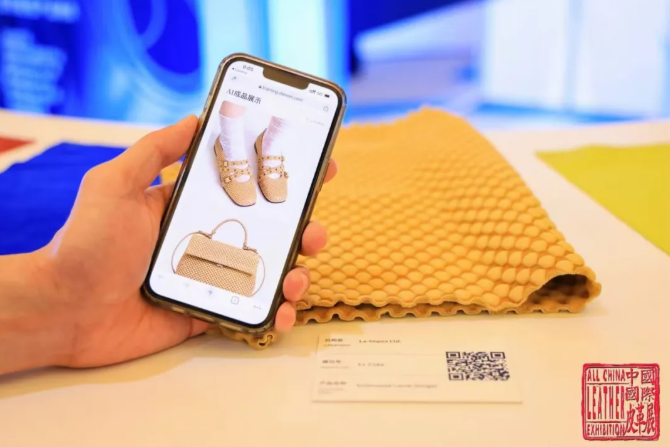
One example was AI Leatherlens, developed by APLF and Diction and introduced at ACLE 2026. The application demonstrated how different leather textures can be visualised directly on footwear, handbags, luxury goods and automotive interiors, creating a more immediate connection between an upstream material and its potential end use.
The buyer perspective supported the same direction. Material selection is increasingly influenced not only by quality, but also by sustainability, texture, thickness, colour and relevance to current fashion directions. For brands seeking greater differentiation, traceability, access to distinctive materials and the supplier’s ability to co-develop new finishes or specifications are becoming important sourcing criteria.
This changes where sourcing begins. Instead of selecting materials only after a product concept is fixed, designers and buyers can increasingly evaluate materials alongside the design itself.
Looking Ahead to ACLE 2027
The themes emerging from ACLE 2026 point towards an industry that is becoming more traceable, more technology-driven and more closely connected to downstream applications.
Buyers are looking beyond basic product availability. Technical performance, regulatory readiness, sustainability credentials, development capability and production efficiency are becoming increasingly important parts of supplier selection.
The buyer discussions at ACLE also underline the importance of bringing a broad international supplier base together in one place. For brands seeking premium or distinctive materials, exhibitions provide an opportunity not only to maintain relationships with existing suppliers, but also to discover sources that may otherwise be difficult to access and to compare new possibilities directly.
AI is likely to play a more practical role in this process. As digital tools develop further, buyers will be able to explore how leather and other materials may work across footwear, bags, furniture and automotive interiors earlier in the sourcing and sampling process.
For ACLE, this reinforces its role not simply as a place to find products, but as a platform to compare suppliers, understand changing requirements, explore new applications and connect upstream innovation with downstream demand.
The market remains challenging, but ACLE 2026 showed an industry continuing to source, invest and adapt. The opportunity is increasingly shifting from supplying more to supplying better — with clearer provenance, stronger performance, greater efficiency and a more direct connection to market needs.
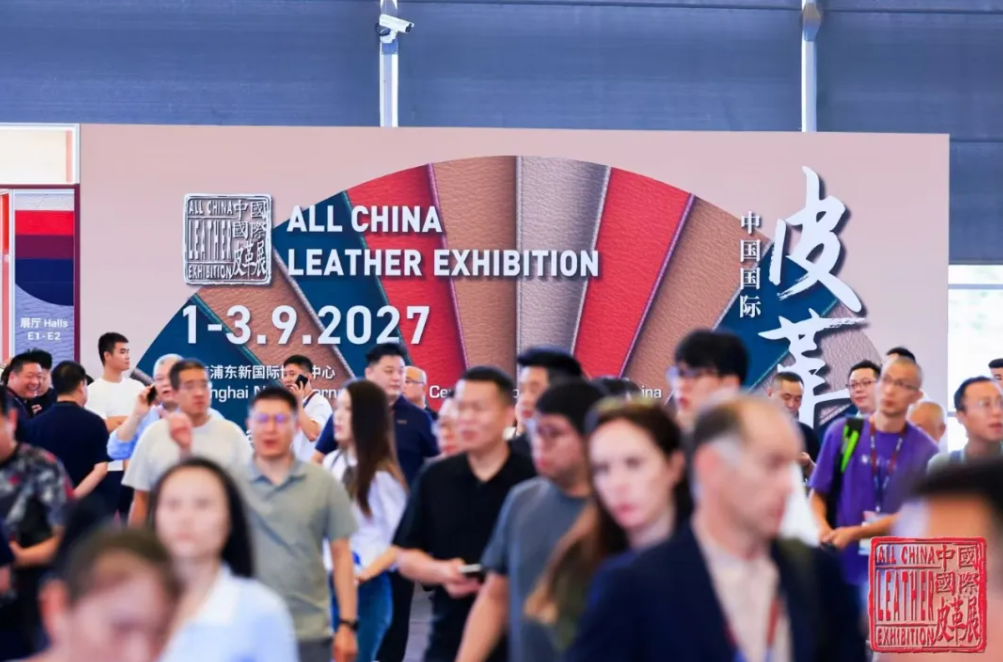
ACLE will return to Shanghai from 1–3 September 2027, continuing to connect materials, technology and market demand across the global leather supply chain.